The Source Code Method
Every body is born with a source code. Life overwrites it.
Birth compresses. Stress tightens. Fear locks down. The body adapts and survives, and in doing so the original blueprint of health, rhythm and ease gets written over. Restrictions form in the fascia. The rhythm falters. The Source Code Method is the way back.
In short
The Source Code Method is a gentle manual and nervous-system practice founded by Shenaaz Khan in Johannesburg. It releases the fascia with sustained five-gram touch (Meet · Melt · Move), regulates the nervous system first so the body can let go, and integrates somatic processing and sound into one five-phase session.
What makes it one method, not a list of techniques
Most of us who train in bodywork collect modalities. Shenaaz did too, across fascia release work, Structural Integration, lymph drainage, sound, somatic release and energy traditions. The problem was never the techniques. It was that each came with its own map, and the maps did not talk to each other.
The Source Code Method keeps one map. Fascia is the terrain, because that is where the body holds what it holds. The body's own rhythm is the compass, because it tells your hands where the system is free and where it is stuck. The nervous system is the gate, because nothing releases until the body feels safe. Sound is a key for what the hands cannot reach. And purpose is the horizon, because people heal faster when their life makes sense to them.
Everything a student learns sits somewhere on that one map. That is why it sticks with clients.
The seven principles
What every practitioner holds in their hands.
The body knows
The body has an innate intelligence that knows how to heal. The practitioner's role is never to fix, diagnose or impose. It is to listen, facilitate and follow.
Everything is connected
The fascial web joins every cell into one system. A restriction in the foot affects the head. There are no isolated parts.
Safety first
The nervous system must feel safe before it will release anything. Safety is a state created by the practitioner's own calm, presence, voice and touch.
Less is more
Five grams of pressure. A listening touch. Patient waiting. We never push past a barrier; we meet it and wait for it to melt.
Trauma lives in the body
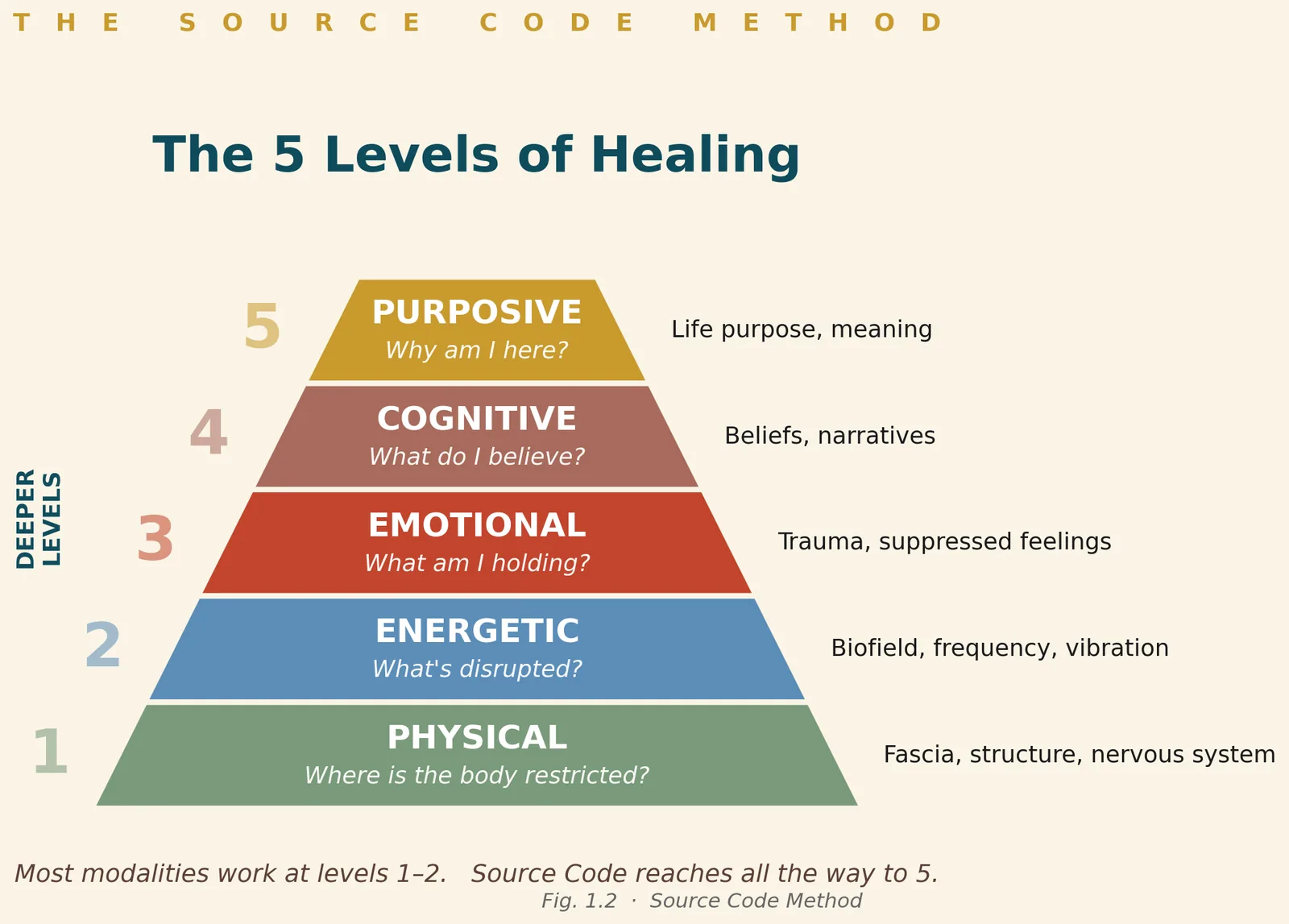
Unresolved stress is held in the fascia, the nervous system and the posture, not only in memory. You cannot think your way out of what your body is holding.
Healing happens in layers
The body heals in its own order, at its own pace. Each session reveals the next layer. The practitioner follows the body's priority, not their own agenda.
Purpose is medicine
Healing is not only the absence of pain. It is the presence of meaning. When people reconnect with why they are here, their bodies heal faster.
“The body leads. Always.”Principle one, in practice
The release
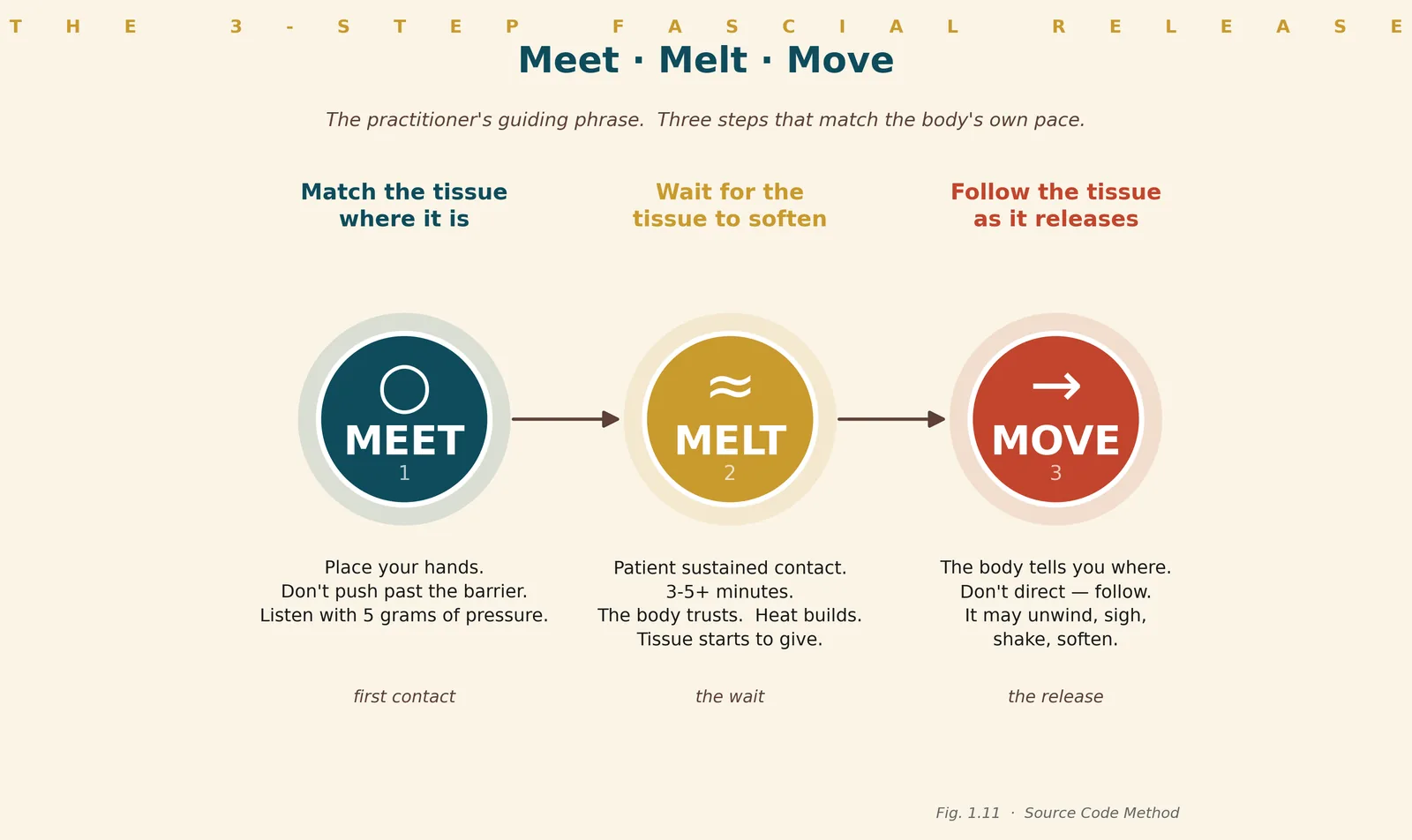
Meet. Melt. Move.
Meet. Place your hands and match the tissue exactly where it is. Do not push past the barrier. Listen with five grams of pressure, the weight of a coin.
Melt. Stay. Three to five minutes of patient, sustained contact. The body trusts, warmth builds, the gel in the fascia thins and the tissue starts to give. This is the part most people cannot wait for.
Move. Follow the tissue as it releases. It may unwind, pull, shake, sigh or go soft. You do not direct; you follow. The body leads.
Students learn this on the head, neck, diaphragm, pelvis and feet first, then anywhere the body asks.
A session
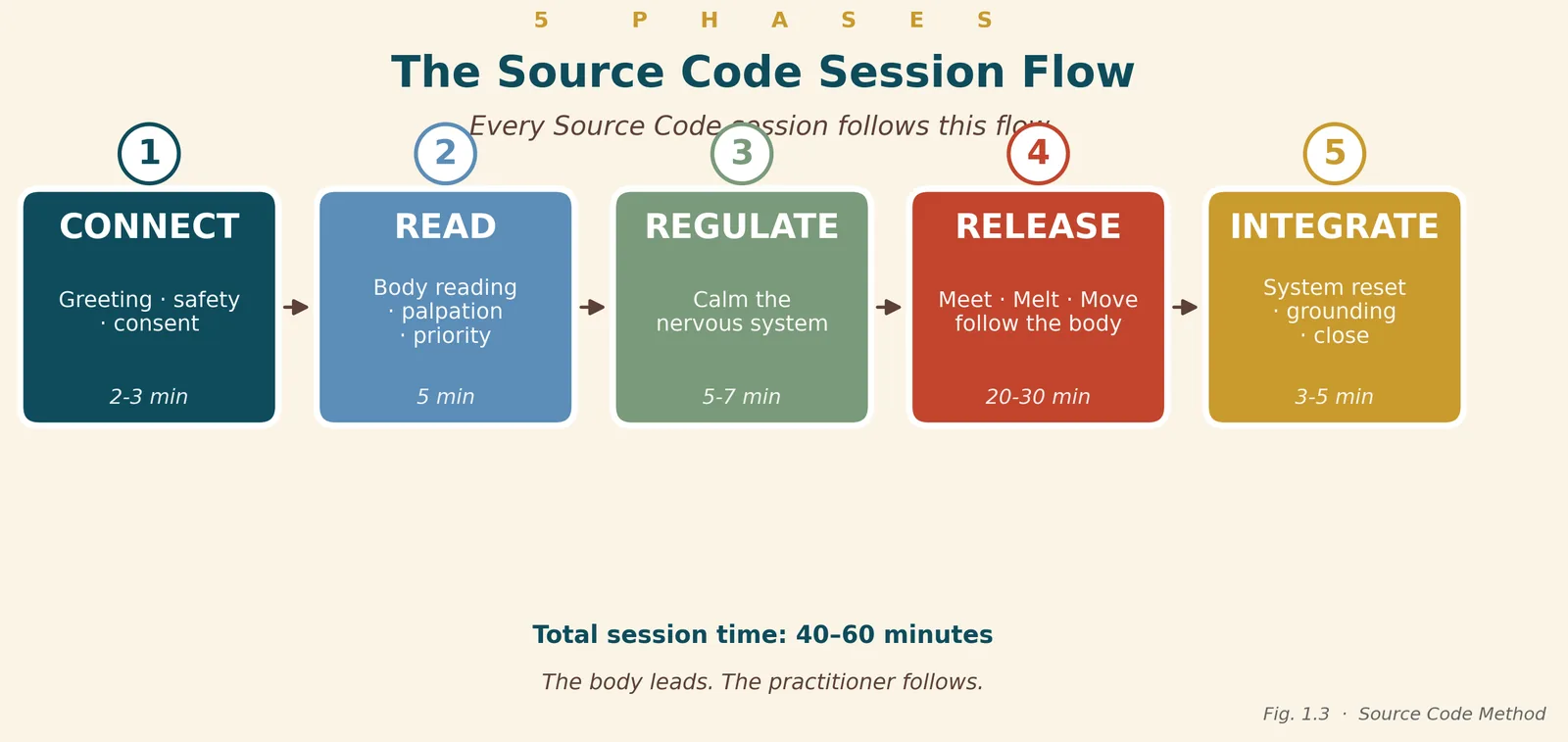
Five phases. Forty to sixty minutes. The body leads, the practitioner follows.
Connect · Read
Greeting, safety, consent, and a few minutes of body reading: palpation, posture, priority. Where is the system asking for attention first?
Regulate · Release
Calm the nervous system, then Meet · Melt · Move where the body leads. Twenty to thirty minutes of the actual work, unhurried.
Integrate
A system reset, grounding, and simple aftercare. The client leaves knowing what happened and what to notice over the next days.
Science and tradition
Both, with respect for each.
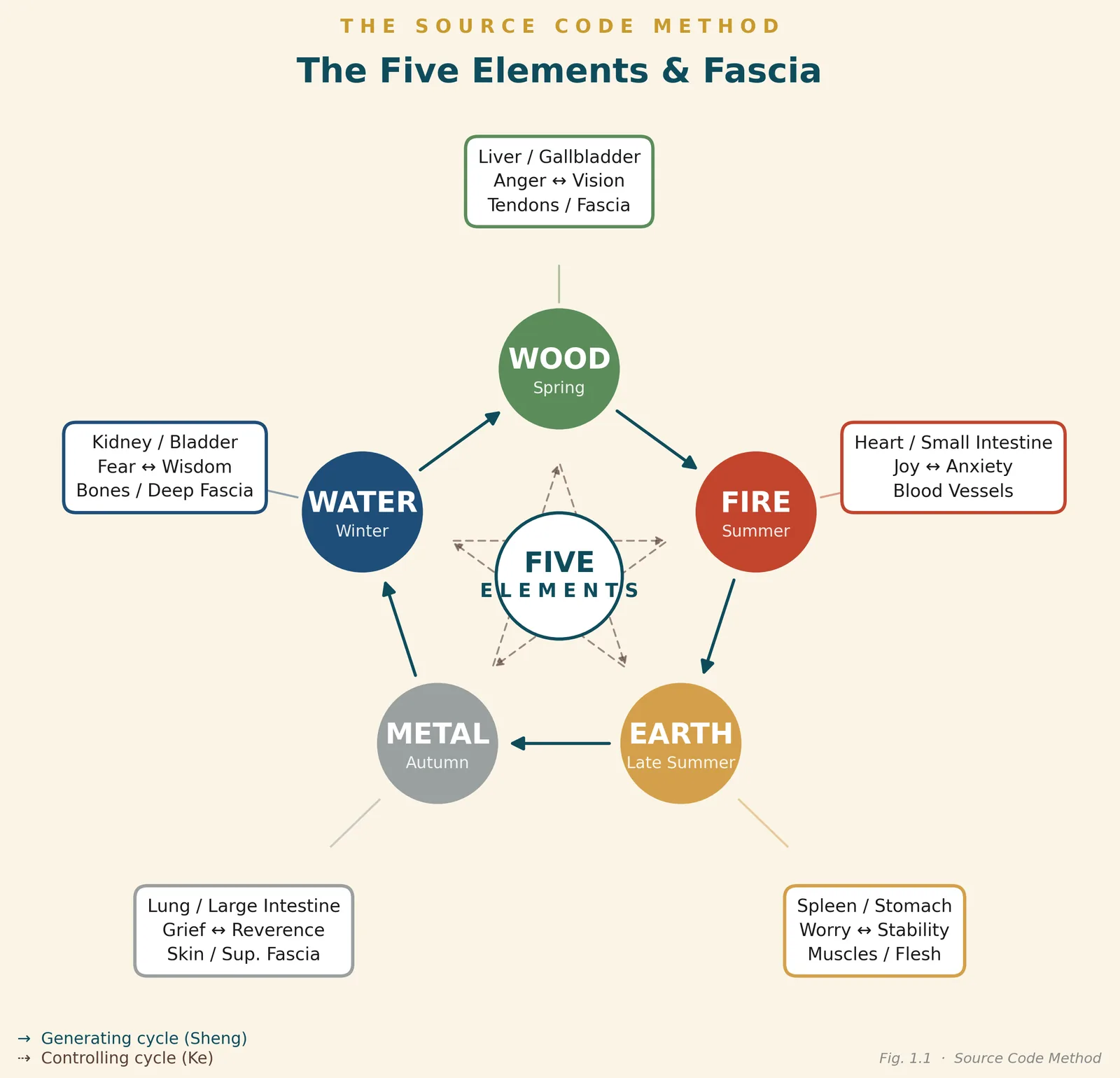
The method stands on current fascia research, manual-therapy teaching practice, polyvagal theory and somatic work. It also draws on the Five Elements as a lens for reading patterns across the body, and on sound as a way to reach tissue the hands cannot. Students learn what the science says, what it does not yet say, and how to speak about both honestly with clients.
What the method never does: diagnose, treat medical conditions, use needles, or promise outcomes. Every student signs a scope-of-practice statement, and learns when to refer to a doctor.